
- Written by: Digi Kaizen
- November 14, 2025
- Categories: Blogs
- Tags:
What Is SEO in 2026? A Complete Guide to AI, GEO, Intent & New Search Trends
Search Engine Optimization – SEO in 2026 is very different from what it was even 2–3 years ago. The era of ranking pages by repeating keywords and building random backlinks is officially over.
Today, SEO is shaped by AI-powered search, user intent, entities, Generative Engine Optimization (GEO), and trust signals. Search engines no longer just rank web pages they recommend answers.
This blog explains what is SEO in 2026 really means, how it works, and what businesses, marketers, and creators must do to stay visible.
What Is SEO in 2026?
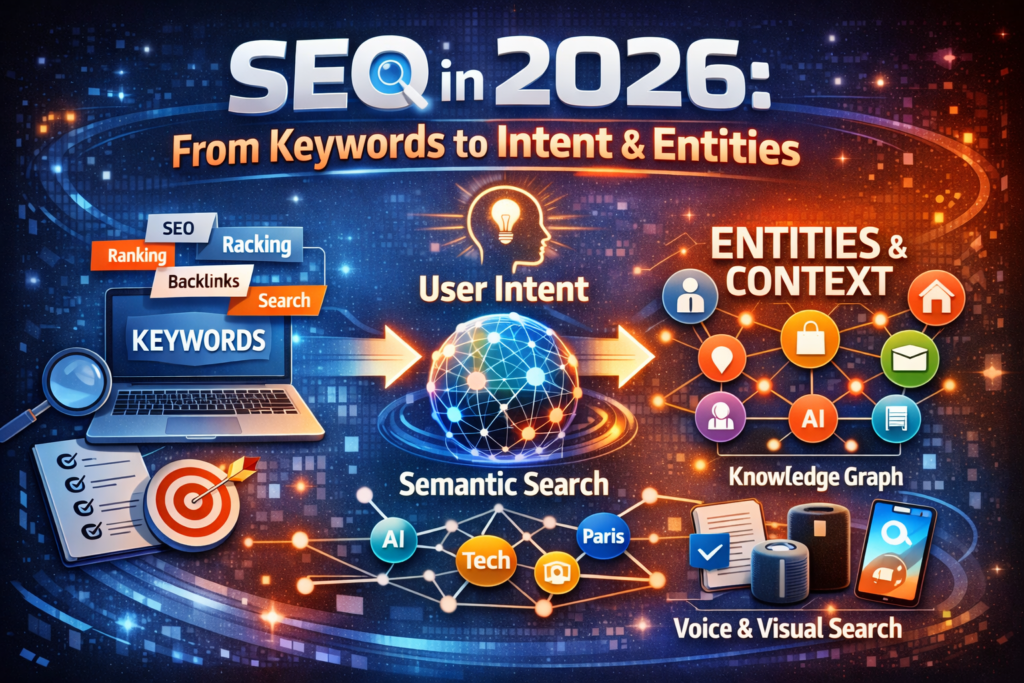
SEO in 2026 is the practice of optimizing websites, content, and brands so that AI-driven search engines understand, trust, and surface them as reliable answers across traditional search results, AI Overviews, voice search, and generative responses.
Search engines like Google now focus on:
- Understanding meaning, not words
- Identifying search intent, not queries
- Trusting entities, not anonymous pages
SEO has evolved from ranking for keywords to being the best answer.
The Evolution of SEO - From Keywords to Meaning
In earlier years, SEO was driven by:
- Keyword density
- Exact-match domains
- Backlinks in bulk
In Digital Marketing in 2026, search engines use AI models and semantic understanding to evaluate:
- What the user actually wants?
- Whether your content solves that need
- How trustworthy and experienced your brand is?
Example:
If someone searches:
“Is SEO still worth it in 2026?”
Google doesn’t look for that exact sentence.
It looks for content explaining:
- Current SEO relevance
- AI impact on search
- Real business outcomes
This shift is why many keyword-stuffed pages no longer rank.
Search Intent: The Foundation of SEO in 2026
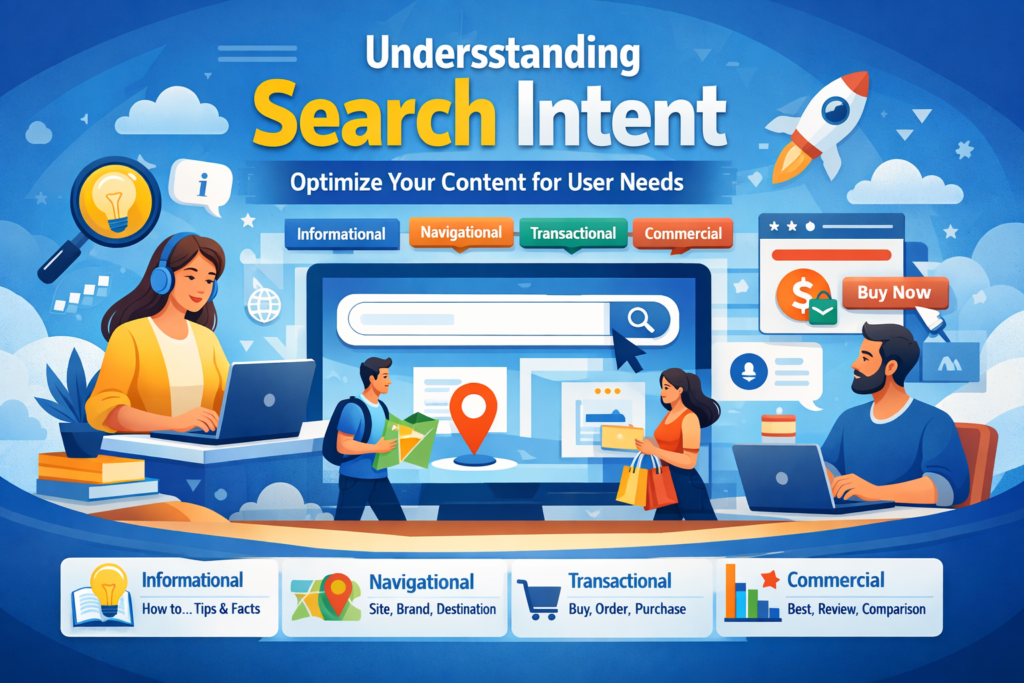
Search intent is the reason behind a search. In 2026, it is the strongest ranking factor.
There are four main intent types:
- Informational – learning something
- Navigational – finding a platform or brand
- Commercial – comparing services or tools
- Transactional – ready to buy or act
If your content does not perfectly align with the intent, rankings will be unstable even with strong backlinks.
SEO today starts with this question:
Why is the user searching this?
Entity-Based SEO: How Search Engines Think Now
Content is no longer written to “rank.”
It’s written to move users from awareness → trust → action.
Content Types by Funnel Stage
1. Top of Funnel (TOFU)
Informational blogs
Educational videos
Explainers
2. Middle of Funnel (MOFU)
Case studies
Comparison pages
Guides
3. Bottom of Funnel (BOFU)
Service pages
Landing pages
Demo / consultation pages
Tools Used
- ChatGPT / Claude (ideation only)
- Google Docs + NLP tools
- Heatmaps (Hotjar)
- GA4 content performance
Outputs
- Time on page
- Scroll depth
- Assisted conversions
- Lead attribution
AI-Powered Search & AI Overviews
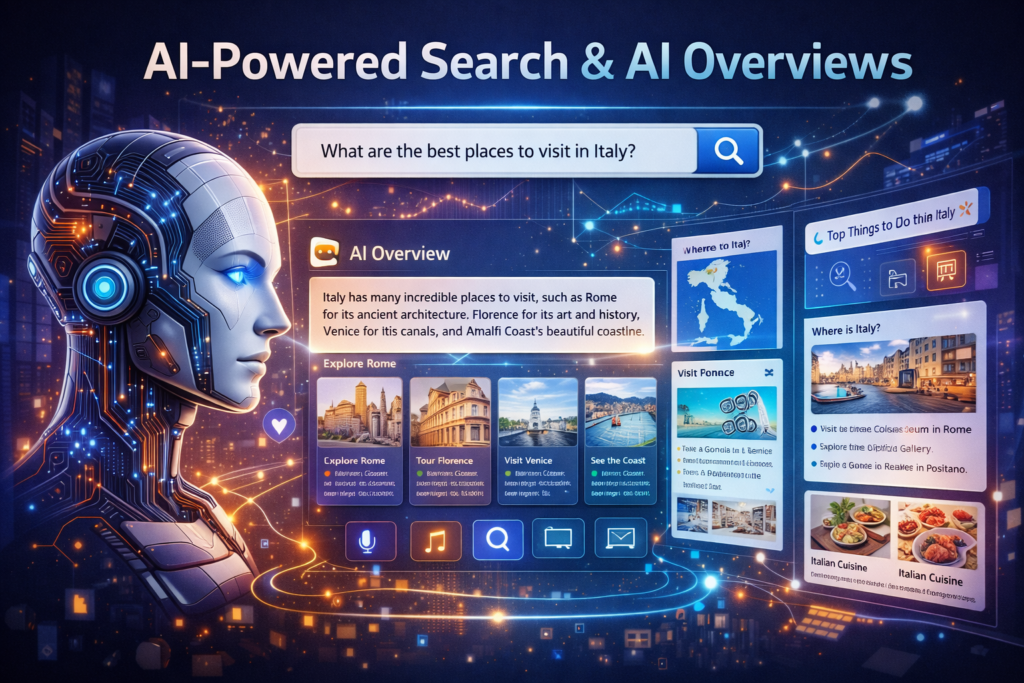
AI has completely changed how results are displayed.
With AI Overviews, Google:
- Reads multiple sources
- Summarizes information
- Shows direct answers at the top
To appear in AI-driven results, content must:
- Be clearly structured
- Provide accurate explanations
- Include real-world experience
- Answer follow-up questions naturally
AI prefers helpful, human-written content, not rewritten articles.
What Is GEO (Generative Engine Optimization)?
GEO stands for Generative Engine Optimization one of the biggest SEO trends in 2026.
GEO focuses on optimizing content so that AI engines use your website as a source when generating answers, even if users never click your link.
In simple terms:
- SEO helps you rank
- GEO helps AI quote, summarize, and trust you
GEO Optimization Includes:
- Clear definitions
- Strong entity relationships
- Factually correct information
- Author credibility
- Context-rich explanations
Brands that win GEO become default references in AI search.
EEAT - Trust Is the New Ranking Power
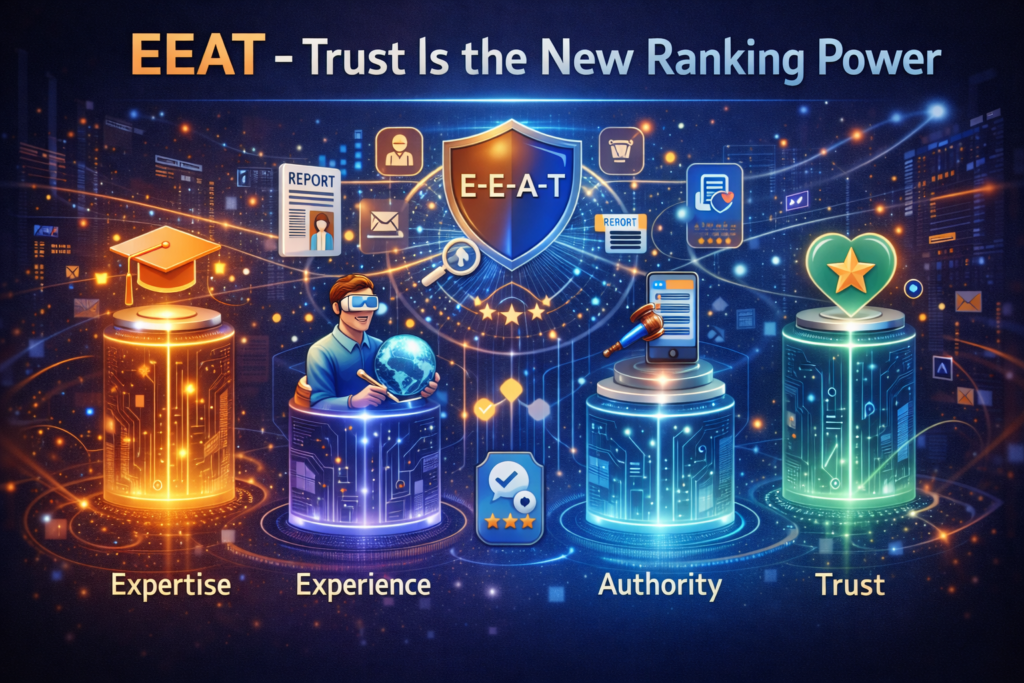
Google evaluates content using EEAT:
- Experience: Real usage or execution
- Expertise: Deep understanding
- Authoritativeness: Recognition by others
- Trust: Accuracy and transparency
EEAT In 2026:
- Generic AI content struggles
- Fake expertise fails
- Real experience ranks
Adding case studies, author bios, credentials, and original insights is no longer optional it is essential.
Topical Authority - Why Single Blogs Don’t Work Anymore?
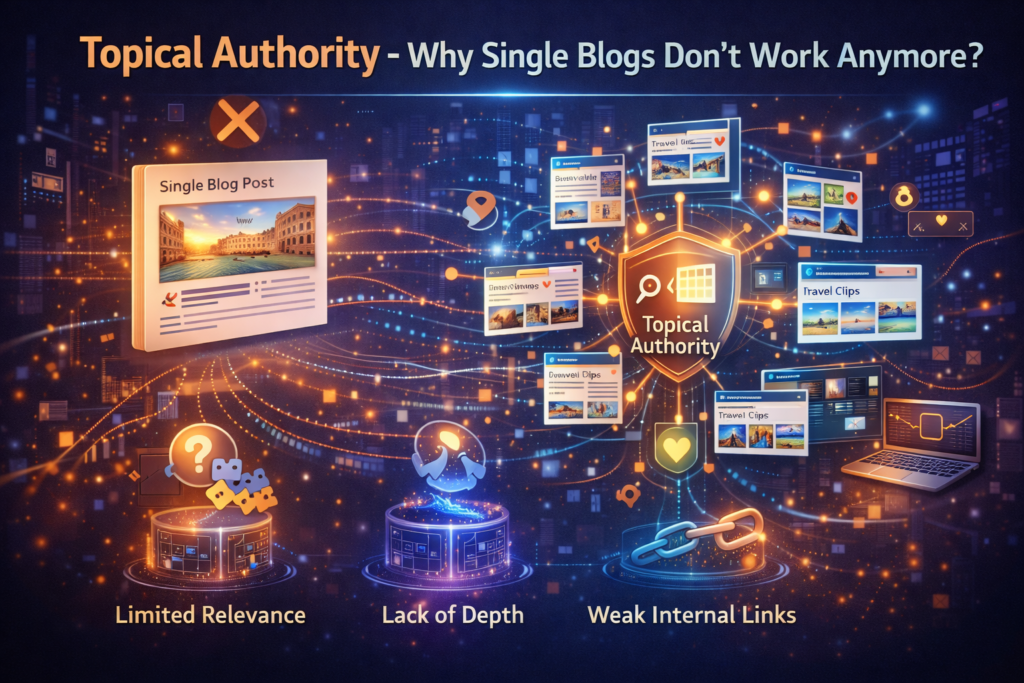
Ranking one article is not enough in 2026.
Search engines reward websites that own an entire topic.
For example, instead of just one SEO blog, a strong site covers:
- What is SEO
- Technical SEO
- On-page SEO
- Off-page SEO
- Local SEO
- AI SEO
- SEO case studies
All interlinked logically.
This tells Google:
“This website deeply understands SEO.”
As a result:
- Rankings improve faster
- More keywords rank automatically
- Trust increases over time
Technical SEO in 2026 - Still the Backbone
Even with AI and content evolution, technical SEO remains critical.
Key technical factors in 2026:
- Core Web Vitals
- Mobile-first performance
- Clean URL structure
- Crawl efficiency
- JavaScript rendering
- Schema markup
Without a technically strong website, even high-quality content may not appear in AI-driven results.
SEO Tools in 2026 , How Professionals Use Them?
SEO tools are still important, but their role has changed.
Modern SEOs use tools to analyze:
- Search intent
- Entity gaps
- Content depth
- User behavior
Popular tools include:
- Ahrefs
- SEMrush
- Google Search Console
Tools support decisions; they don’t replace strategy.
Local SEO in 2026: AI + Real-World Trust
Local SEO now depends on
- Consistent business information
- Genuine reviews
- Local entity signals
- Real user engagement
- AI evaluates whether your business is legitimate and trusted offline, not just optimized online.
This is critical for service-based businesses and agencies.
What Will SEO Success Looks Like in 2026?
SEO success is no longer measured only by traffic.
It includes:
- AI visibility
- Brand authority
- Lead quality
- Conversion intent
- Long-term trust
The goal is not just to rank it is to be chosen.
Conclusion: SEO in 2026 Is More Human Than Ever
SEO in 2026 sits at the intersection of:
- Human psychology
- Artificial intelligence
- Content quality
- Brand trust
If your content genuinely helps users and demonstrates real experience, AI will amplify it.