
- Written by: Digi Kaizen
- February 14, 2026
- Categories: Blogs
- Tags:
What Is AEO and GEO? AEO vs GEO vs SEO Explained for the AI Search Era
Search is no longer limited to blue links and rankings.
With AI-powered answers, voice assistants, and generative search results, how users discover information has fundamentally changed.
This is why new optimization models like AEO (Answer Engine Optimization) and GEO (Generative Engine Optimization) have emerged alongside traditional SEO.
In this blog, you’ll clearly understand:
- What is AEO?
- What is GEO?
- How they differ from SEO?
- AEO vs GEO vs SEO?
- Which one matters most in 2026?
What Is AEO (Answer Engine Optimization)?
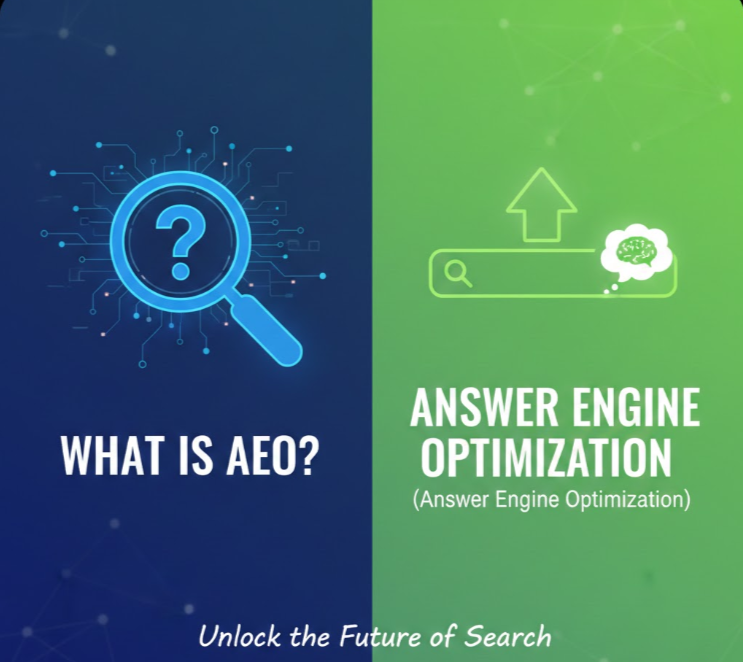
AEO (Answer Engine Optimization) is the process of optimizing content so that search engines and AI assistants can directly answer user questions using your content.
Instead of ranking a page, the goal of AEO is:
To become the direct answer
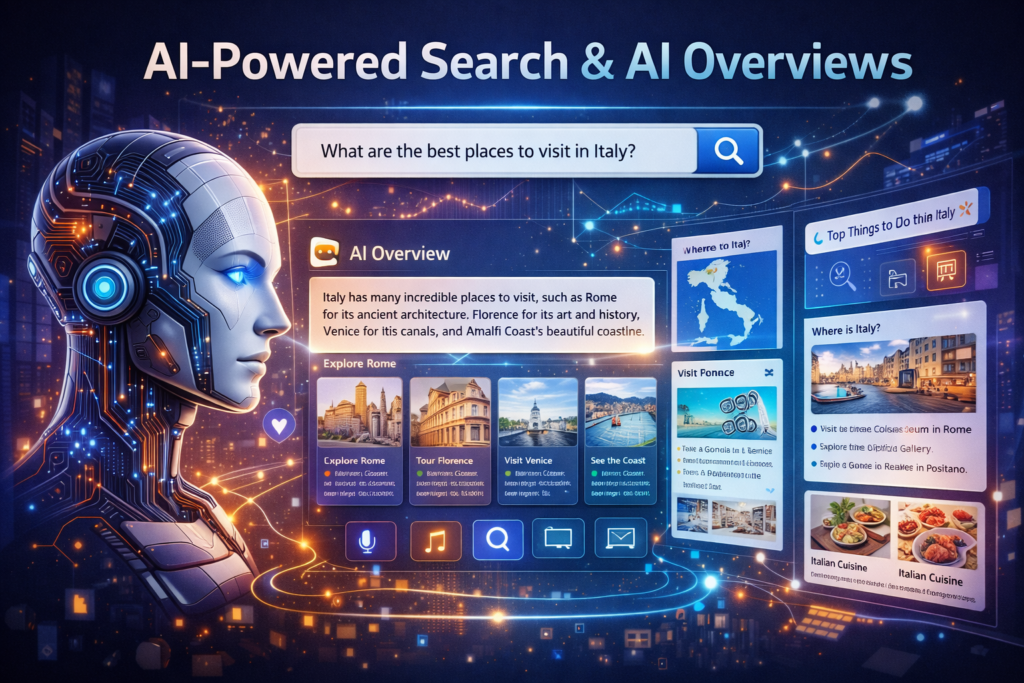
Search engines like Google increasingly show:
>> Featured snippets
>> AI Overviews
>> Voice answers
>> “People Also Ask” results
AEO helps your content appear inside these answers, often without a click.
Example of AEO:
User asks:
“What is AEO in SEO?”
Optimized AEO content:
>> Gives a clear definition
>> Uses short, precise explanations
>> Answers follow-up questions
>> Uses structured headings and FAQs
Your content becomes the spoken or displayed answer.
Key Elements of AEO (Answer Engine Optimization)?
AEO-focused content typically includes:
- Clear definitions (40–60 words)
- Question-based headings
- FAQ sections
- Structured data (FAQ schema)
- Simple, conversational language
- High factual accuracy
AEO is especially powerful for:
- Voice search
- AI assistants
- Informational queries
- Zero-click searches
What Is GEO (Generative Engine Optimization)?
GEO (Generative Engine Optimization) is the process of optimizing content so that AI models use your content as a source when generating answers.
Unlike AEO (which gives direct answers), GEO focuses on:
👉 Being referenced, summarized, or trusted by AI systems
In generative search, AI:
- Reads multiple sources
- Understands entities and context
- Creates a new, combined answer
GEO ensures your brand and content are part of that generated response.
How GEO (Generative Engine Optimization) Works in Modern Search?
AI-driven search engines analyze:
- Entity relationships
- Content depth
- Context completeness
- Author credibility
- Brand authority
If your content is:
- Accurate
- Well-structured
- Entity-rich
- Trustworthy
AI engines are more likely to use your content as a reference.
This means:
- Visibility even without clicks
- Brand mentions in AI answers
- Long-term authority growth
SEO: The Foundation That Still Matters
SEO (Search Engine Optimization) is still the foundation of all search visibility.
SEO focuses on:
- Ranking web pages
- Driving organic traffic
- Optimizing technical and content elements
But SEO alone is no longer enough in 2026.
Modern SEO has evolved to include:
- Intent optimization
- Entity-based content
- EEAT (Experience, Expertise, Authority, Trust)
- AI-readability
Think of SEO as the base layer, while AEO and GEO are advanced layers built on top of it.
Key Differences in AEO vs GEO vs SEO - Explained
1. Purpose
- SEO → Rank pages in search results
- AEO → Answer user questions directly
- GEO → Become a trusted source for AI-generated answers
2. Primary Focus
- SEO → Keywords, content, links, technical health
- AEO → Questions, definitions, featured snippets
- GEO → Entities, context, authority, trust
3. Visibility Type
- SEO → Click-based traffic
- AEO → Zero-click answers, voice results
- GEO → AI summaries, references, citations
4. Content Style
- SEO → Long-form, optimized content
- AEO → Short, precise, question-driven
- GEO → In-depth, contextual, expert-led
5. Who Benefits Most
- SEO → Blogs, ecommerce, service pages
- AEO → FAQs, guides, how-to content
- GEO → Brands, agencies, thought leaders
Do You Need SEO, AEO, and GEO Together?

Yes, they are not competitors; they are complements.
Best Strategy in 2026:
- SEO → Builds discoverability
- AEO → Wins quick answers & voice search
- GEO → Secures AI trust & future visibility
A website optimized only for SEO may rank,
But a website optimized for SEO + AEO + GEO becomes authoritative.
SEO, AEO, and GEO Real-World Example
Search query:
“Is SEO dead in 2026?”
First, SEO helps your blog rank
Second, AEO helps your definition appear in AI Overviews
Third, GEO helps AI summarize your explanation as a trusted source
Result👉 Traffic + Authority + AI Visibility
Why AEO & GEO Matter More in 2026?
Because search behavior has changed:
- More voice searches
- More AI answers
- Fewer clicks
- Higher trust-based selection
Search engines now ask:
“Who understands this topic best?”
Not:
“Who used the keyword most?”
Conclusion - The Future of Search Optimization
SEO Tools in 2026 , How Professionals Use Them?
- What is SEO in 2026?
SEO helps you get found
AEO helps you get answered
GEO helps you get trusted
The brands that win search are those that:
- Help users clearly
- Demonstrate real experience
- Structure content for humans and AI
- Build long-term authority