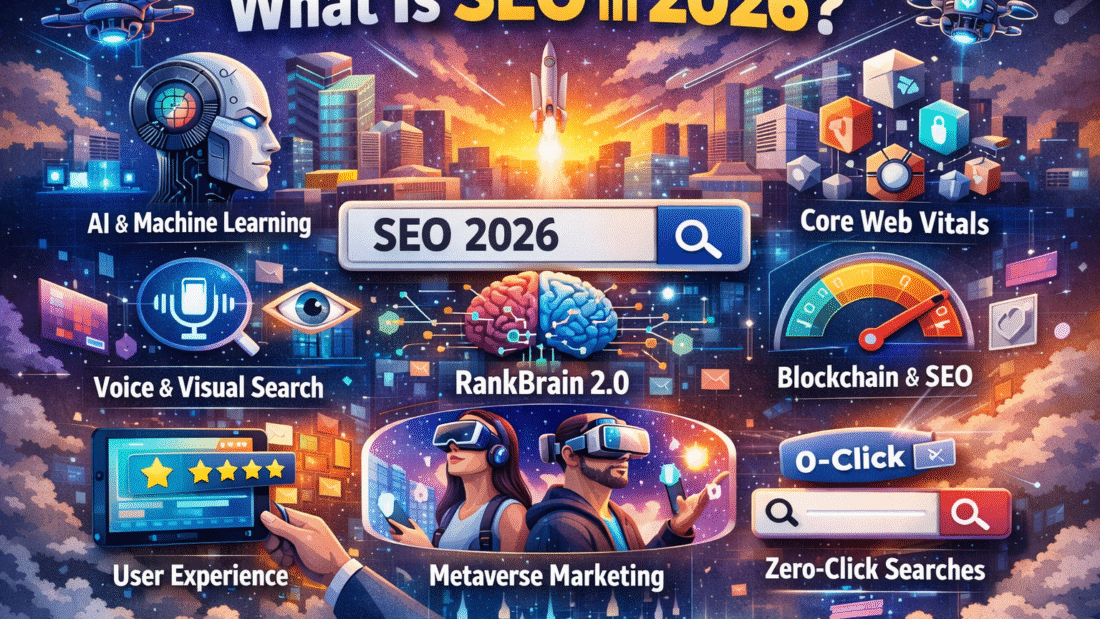
What Is SEO in 2026

What Is AEO and GEO? AEO vs GEO vs SEO Explained for the AI Search Era

Search is no longer limited to blue links and rankings.
With AI-powered answers, voice assistants, and generative search results, how users discover information has fundamentally changed.

This is why new optimization models like AEO (Answer Engine Optimization) and GEO (Generative Engine Optimization) have emerged alongside traditional SEO.

In this blog, you’ll clearly understand:

  1. What is AEO?
  2. What is GEO?
  3. How they differ from SEO?
  4. AEO vs GEO vs SEO?
  5. Which one matters most in 2026?

What Is AEO (Answer Engine Optimization)?
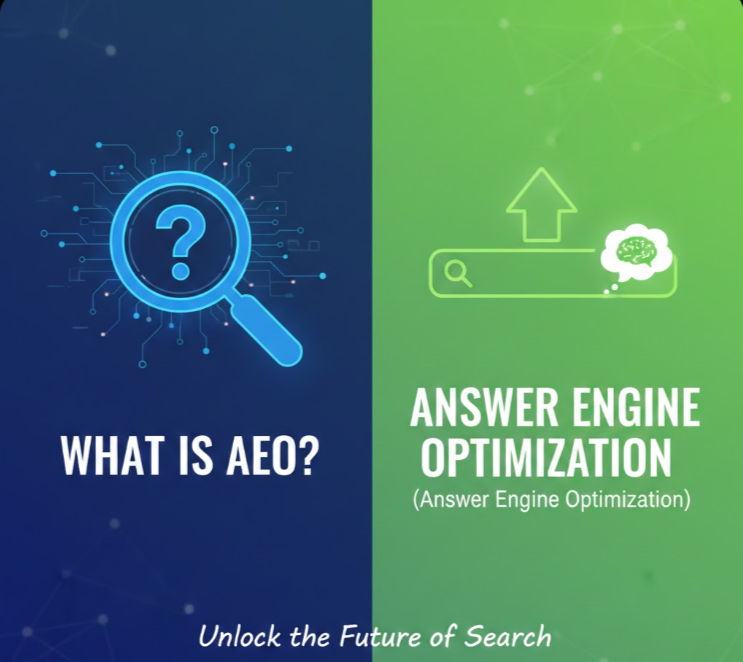
What is GEO

AEO (Answer Engine Optimization) is the process of optimizing content so that search engines and AI assistants can directly answer user questions using your content.

Instead of ranking a page, the goal of AEO is:
👉 To become the direct answer

Search engines like Google increasingly show:

>> Featured snippets

>> AI Overviews

>> Voice answers

>> “People Also Ask” results

AEO helps your content appear inside these answers, often without a click.

Example of AEO:

User asks:

“What is AEO in SEO?”

Optimized AEO content:

>> Gives a clear definition

>> Uses short, precise explanations

>> Answers follow-up questions

>> Uses structured headings and FAQs

Your content becomes the spoken or displayed answer.

Key Elements of AEO (Answer Engine Optimization)?

AEO-focused content typically includes:

  1. Clear definitions (40–60 words)
  2. Question-based headings
  3. FAQ sections
  4. Structured data (FAQ schema)
  5. Simple, conversational language
  6. High factual accuracy

AEO is especially powerful for:

  1. Voice search
  2. AI assistants
  3. Informational queries
  4. Zero-click searches

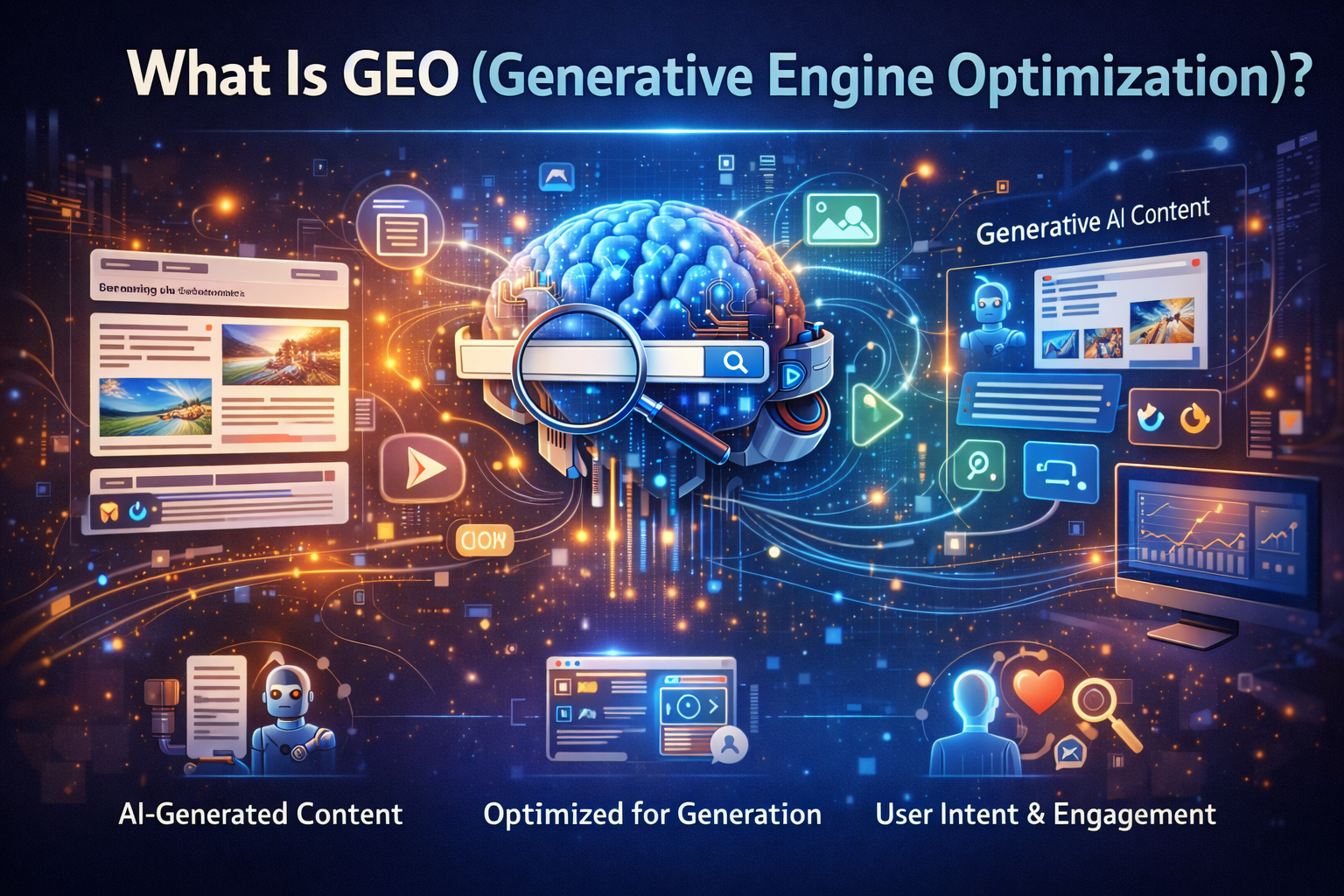
What Is GEO (Generative Engine Optimization)?

What is GEO

GEO (Generative Engine Optimization) is the process of optimizing content so that AI models use your content as a source when generating answers.

Unlike AEO (which gives direct answers), GEO focuses on:
👉 Being referenced, summarized, or trusted by AI systems

In generative search, AI:

  1. Reads multiple sources
  2. Understands entities and context
  3. Creates a new, combined answer

GEO ensures your brand and content are part of that generated response.

How GEO (Generative Engine Optimization) Works in Modern Search?

AI-driven search engines analyze:

  1. Entity relationships
  2. Content depth
  3. Context completeness
  4. Author credibility
  5. Brand authority

If your content is:

  1. Accurate
  2. Well-structured
  3. Entity-rich
  4. Trustworthy

AI engines are more likely to use your content as a reference.

This means:

  1. Visibility even without clicks
  2. Brand mentions in AI answers
  3. Long-term authority growth

SEO: The Foundation That Still Matters
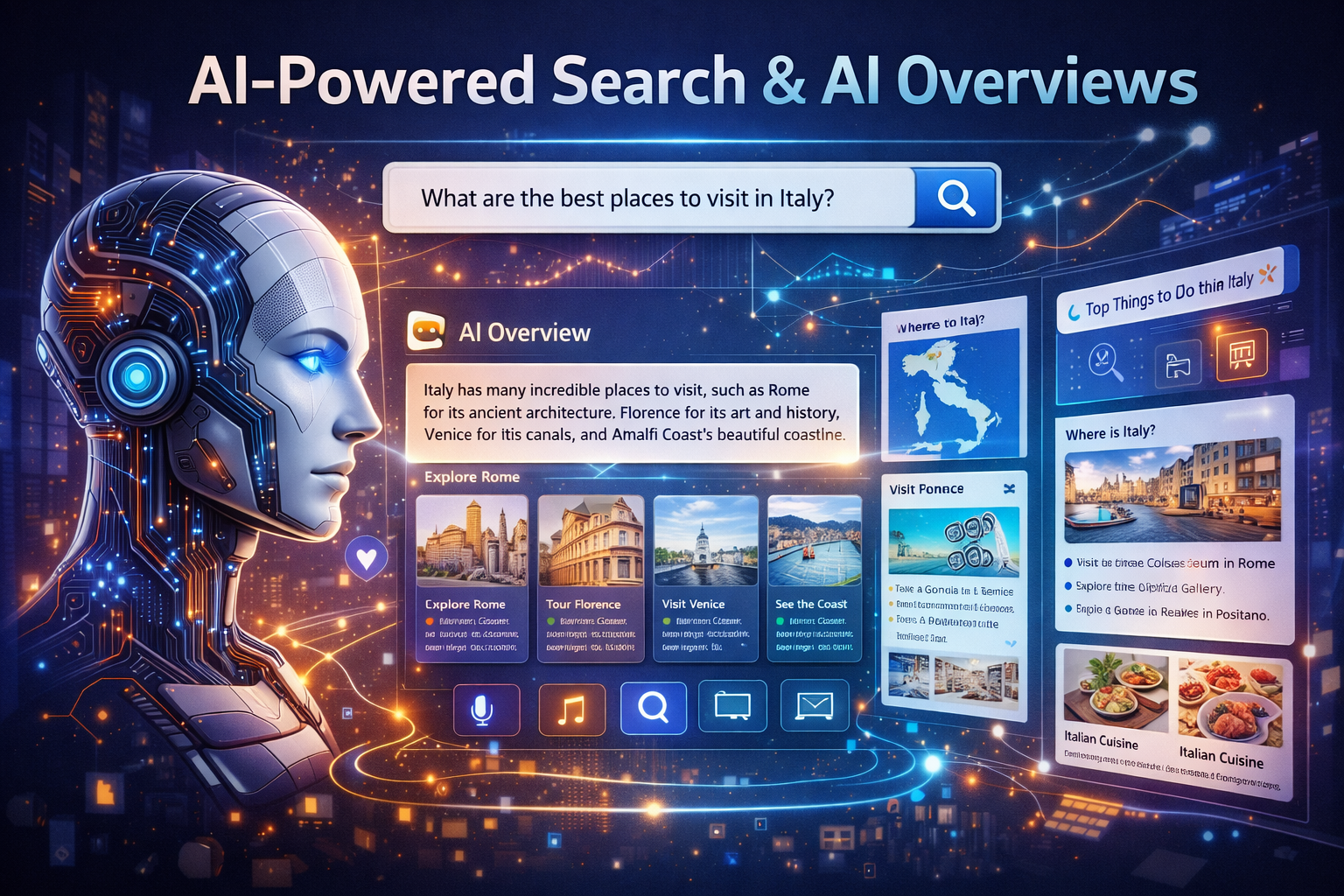
AI-Powered Search & AI Overviews

SEO (Search Engine Optimization) is still the foundation of all search visibility.

SEO focuses on:

  1. Ranking web pages
  2. Driving organic traffic
  3. Optimizing technical and content elements

But SEO alone is no longer enough in 2026.

Modern SEO has evolved to include:

  1. Intent optimization
  2. Entity-based content
  3. EEAT (Experience, Expertise, Authority, Trust)
  4. AI-readability

Think of SEO as the base layer, while AEO and GEO are advanced layers built on top of it.

Key Differences in AEO vs GEO vs SEO - Explained
WHAT IS GEO

1. Purpose

  • SEO → Rank pages in search results

  • AEO → Answer user questions directly

  • GEO → Become a trusted source for AI-generated answers


2. Primary Focus

  • SEO → Keywords, content, links, technical health

  • AEO → Questions, definitions, featured snippets

  • GEO → Entities, context, authority, trust


3. Visibility Type

  • SEO → Click-based traffic

  • AEO → Zero-click answers, voice results

  • GEO → AI summaries, references, citations


4. Content Style

  • SEO → Long-form, optimized content

  • AEO → Short, precise, question-driven

  • GEO → In-depth, contextual, expert-led


5. Who Benefits Most

  • SEO → Blogs, ecommerce, service pages

  • AEO → FAQs, guides, how-to content

  • GEO → Brands, agencies, thought leaders

Do You Need SEO, AEO, and GEO Together?
Yes, they are not competitors; they are complements.

Best Strategy in 2026:

  • SEO → Builds discoverability

  • AEO → Wins quick answers & voice search

  • GEO → Secures AI trust & future visibility

A website optimized only for SEO may rank,
But a website optimized for SEO + AEO + GEO becomes authoritative.

SEO, AEO, and GEO Real-World Example

Search query:

“Is SEO dead in 2026?”

First, SEO helps your blog rank

Second, AEO helps your definition appear in AI Overviews

Third, GEO helps AI summarize your explanation as a trusted source

Result👉 Traffic + Authority + AI Visibility

Why AEO & GEO Matter More in 2026?
Topical Authority - Why Single Blogs Don’t Work Anymore?

Because search behavior has changed:

  1. More voice searches
  2. More AI answers
  3. Fewer clicks
  4. Higher trust-based selection

Search engines now ask:

“Who understands this topic best?”

Not:

“Who used the keyword most?”

Conclusion - The Future of Search Optimization

SEO Tools in 2026 , How Professionals Use Them?

  • What is SEO in 2026?
  • SEO helps you get found

  • AEO helps you get answered

  • GEO helps you get trusted

The brands that win search are those that:

  1. Help users clearly
  2. Demonstrate real experience
  3. Structure content for humans and AI
  4. Build long-term authority
What Is SEO in 2026

What Is SEO in 2026? A Complete Guide to AI, GEO, Intent & New Search Trends

Search Engine Optimization – SEO in 2026 is very different from what it was even 2–3 years ago. The era of ranking pages by repeating keywords and building random backlinks is officially over.

Today, SEO is shaped by AI-powered search, user intent, entities, Generative Engine Optimization (GEO), and trust signals. Search engines no longer just rank web pages they recommend answers.

This blog explains what is SEO in 2026 really means, how it works, and what businesses, marketers, and creators must do to stay visible.

What Is SEO in 2026?

SEO in 2026

SEO in 2026 is the practice of optimizing websites, content, and brands so that AI-driven search engines understand, trust, and surface them as reliable answers across traditional search results, AI Overviews, voice search, and generative responses.

Search engines like Google now focus on:

  • Understanding meaning, not words
  • Identifying search intent, not queries
  • Trusting entities, not anonymous pages

SEO has evolved from ranking for keywords to being the best answer.

The Evolution of SEO - From Keywords to Meaning

The Evolution of SEO: From Keywords to Meaning

In earlier years, SEO was driven by:

Keyword density

Exact-match domains

Backlinks in bulk

In Digital Marketing in 2026, search engines use AI models and semantic understanding to evaluate:

  1. What the user actually wants?
  2. Whether your content solves that need
  3. How trustworthy and experienced your brand is?

Example:

If someone searches:

“Is SEO still worth it in 2026?”

Google doesn’t look for that exact sentence.
It looks for content explaining:

  • Current SEO relevance

  • AI impact on search

  • Real business outcomes

This shift is why many keyword-stuffed pages no longer rank.

Search Intent: The Foundation of SEO in 2026

Search Intent

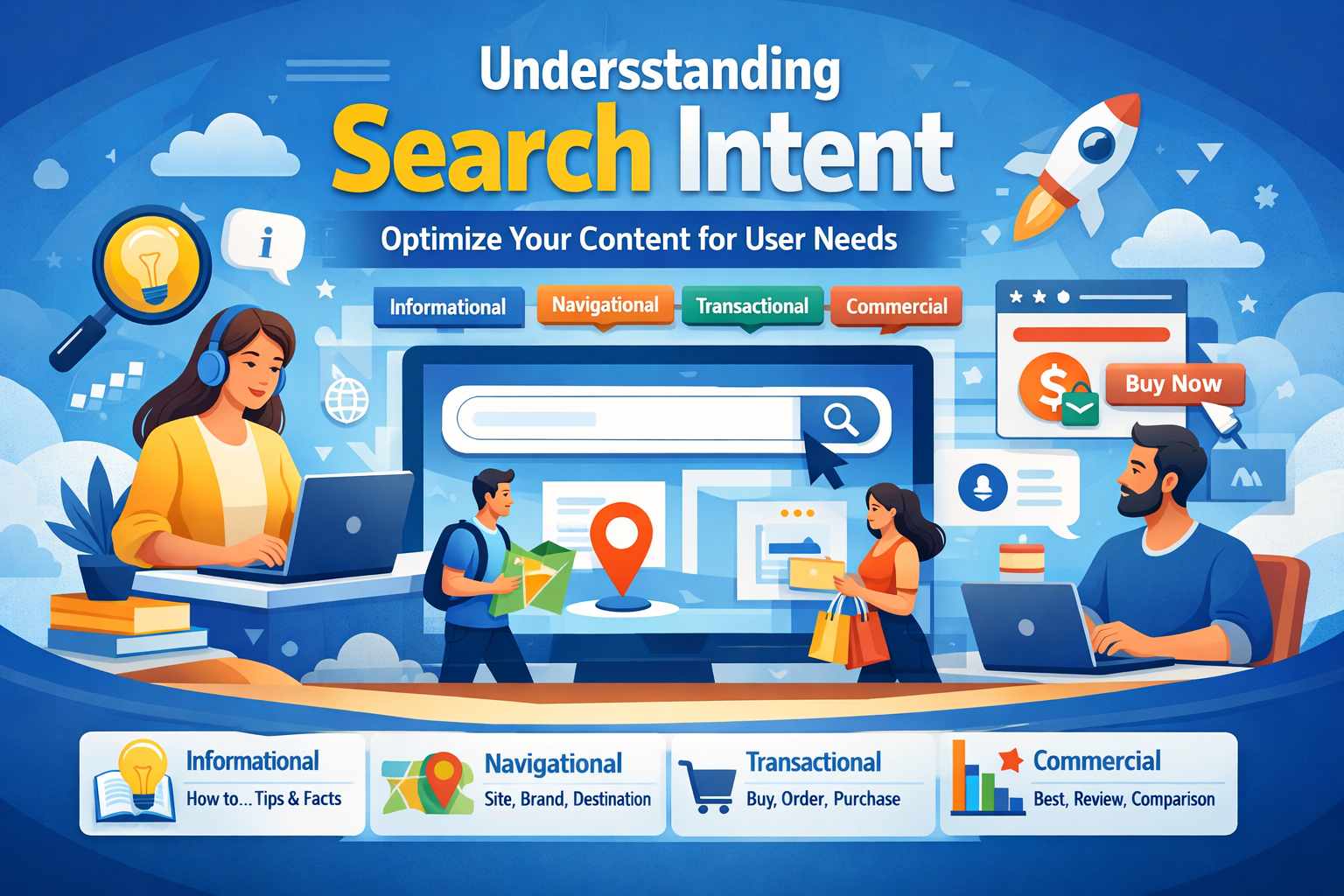
Search intent is the reason behind a search. In 2026, it is the strongest ranking factor.

There are four main intent types:

  1. Informational – learning something
  2. Navigational – finding a platform or brand
  3. Commercial – comparing services or tools
  4. Transactional – ready to buy or act

If your content does not perfectly align with the intent, rankings will be unstable even with strong backlinks.

SEO today starts with this question:

Why is the user searching this?

Entity-Based SEO: How Search Engines Think Now

Content is no longer written to “rank.”
It’s written to move users from awareness → trust → action.

Content Types by Funnel Stage

  • 1. Top of Funnel (TOFU)

Informational blogs
Educational videos
Explainers

  • 2. Middle of Funnel (MOFU)

Case studies
Comparison pages
Guides

  • 3. Bottom of Funnel (BOFU)

Service pages
Landing pages
Demo / consultation pages

Tools Used

ChatGPT / Claude (ideation only)
Google Docs + NLP tools
Heatmaps (Hotjar)
GA4 content performance

Outputs

Time on page
Scroll depth
Assisted conversions
Lead attribution

AI-Powered Search & AI Overviews

AI-Powered Search & AI Overviews

AI has completely changed how results are displayed.

With AI Overviews, Google:

  1. Reads multiple sources
  2. Summarizes information
  3. Shows direct answers at the top

This has reduced casual clicks but increased the value of authority-based visibility.

To appear in AI-driven results, content must:

  1. Be clearly structured
  2. Provide accurate explanations
  3. Include real-world experience
  4. Answer follow-up questions naturally

AI prefers helpful, human-written content, not rewritten articles.

What Is GEO (Generative Engine Optimization)?

WHAT IS GEO

GEO stands for Generative Engine Optimization one of the biggest SEO trends in 2026.

GEO focuses on optimizing content so that AI engines use your website as a source when generating answers, even if users never click your link.

In simple terms:

  1. SEO helps you rank
  2. GEO helps AI quote, summarize, and trust you

GEO Optimization Includes:

  1. Clear definitions
  2. Strong entity relationships
  3. Factually correct information
  4. Author credibility
  5. Context-rich explanations

Brands that win GEO become default references in AI search.

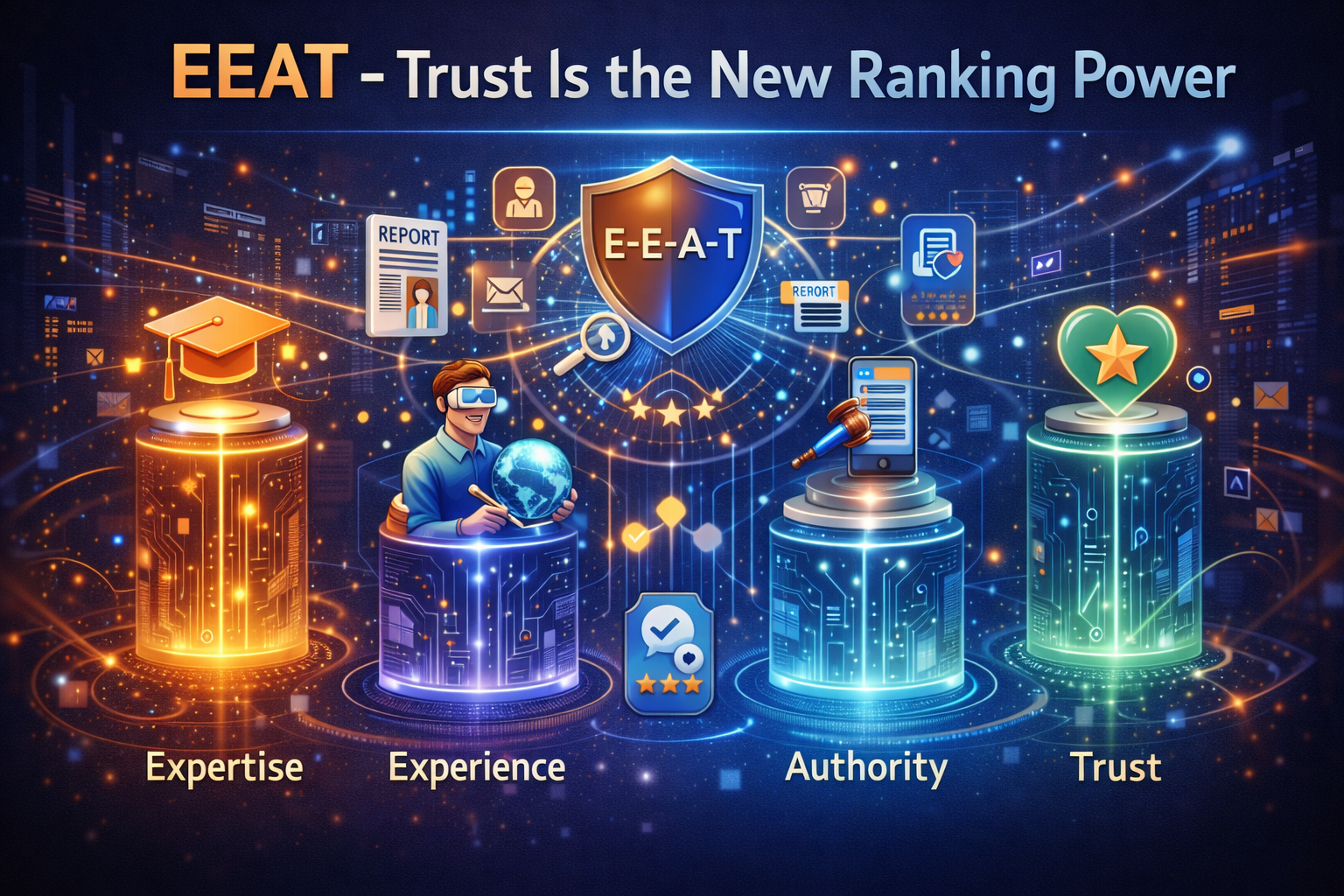
EEAT - Trust Is the New Ranking Power

Google evaluates content using EEAT:

  • Experience – real usage or execution

  • Expertise – deep understanding

  • Authoritativeness – recognition by others

  • Trust – accuracy and transparency

EEAT In 2026:

  1. Generic AI content struggles
  2. Fake expertise fails
  3. Real experience ranks

Adding case studies, author bios, credentials, and original insights is no longer optional it is essential.

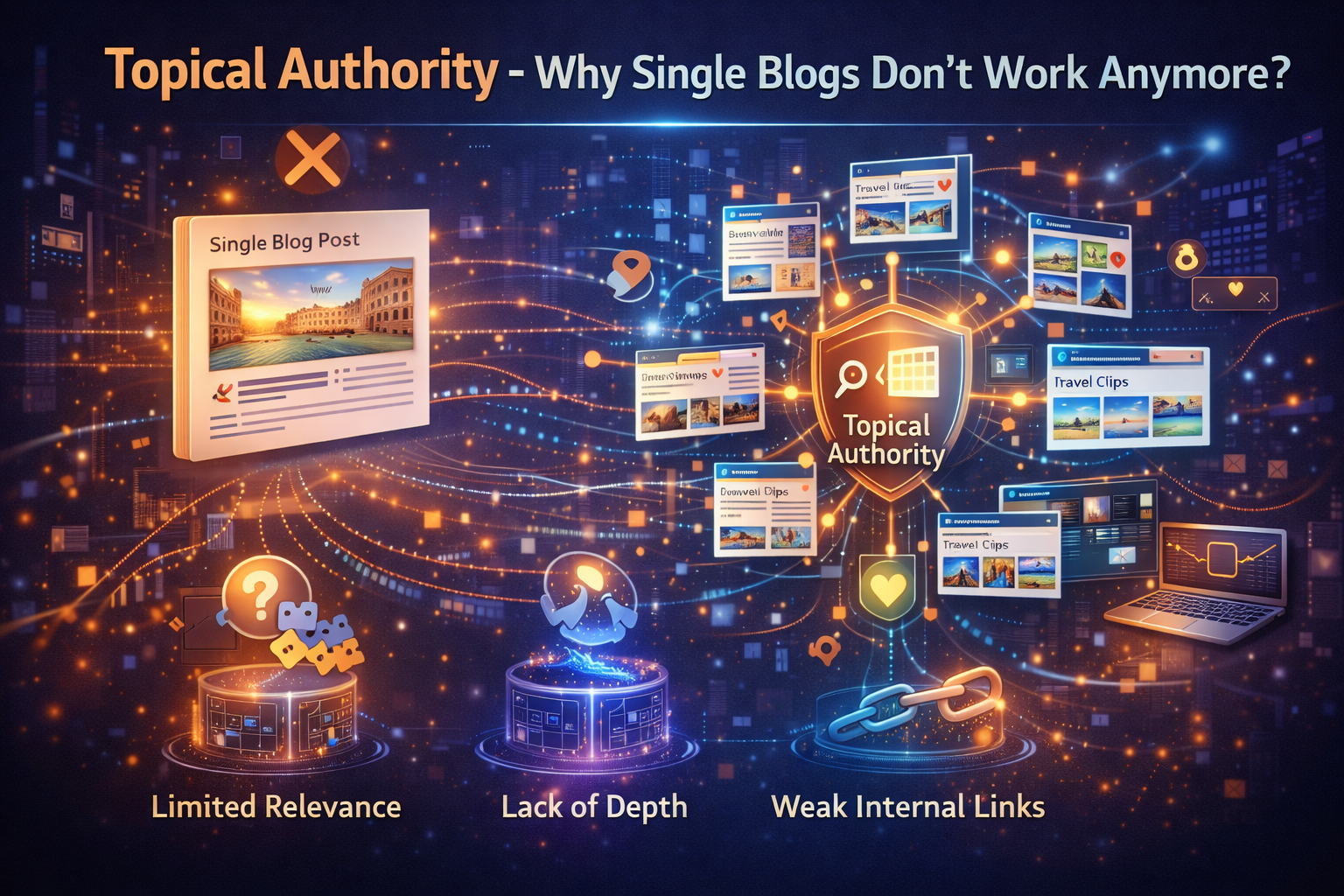
Topical Authority - Why Single Blogs Don’t Work Anymore?

Topical Authority - Why Single Blogs Don’t Work Anymore?

Ranking one article is not enough in 2026.

Search engines reward websites that own an entire topic.

For example, instead of just one SEO blog, a strong site covers:

  1. What is SEO
  2. Technical SEO
  3. On-page SEO
  4. Off-page SEO
  5. Local SEO
  6. AI SEO
  7. SEO case studies

All interlinked logically.

This tells Google:

“This website deeply understands SEO.”

As a result:

  1. Rankings improve faster
  2. More keywords rank automatically
  3. Trust increases over time

Technical SEO in 2026 - Still the Backbone

Even with AI and content evolution, technical SEO remains critical.

Key technical factors in 2026:

  1. Core Web Vitals
  2. Mobile-first performance
  3. Clean URL structure
  4. Crawl efficiency
  5. JavaScript rendering
  6. Schema markup

Without a technically strong website, even high-quality content may not appear in AI-driven results.

SEO Tools in 2026 , How Professionals Use Them?

SEO tools are still important, but their role has changed.

Modern SEOs use tools to analyze:

  1. Search intent
  2. Entity gaps
  3. Content depth
  4. User behavior

Popular tools include:

  1. Ahrefs
  2. SEMrush
  3. Google Search Console

Tools support decisions; they don’t replace strategy.

Local SEO in 2026: AI + Real-World Trust

Local SEO now depends on:

  1. Consistent business information
  2. Genuine reviews
  3. Local entity signals
  4. Real user engagement
  5. AI evaluates whether your business is legitimate and trusted offline, not just optimized online.

This is critical for service-based businesses and agencies.

What SEO Success Looks Like in 2026?

SEO success is no longer measured only by traffic.

It includes:

  1. AI visibility
  2. Brand authority
  3. Lead quality
  4. Conversion intent
  5. Long-term trust

The goal is not just to rank it is to be chosen.

Conclusion: SEO in 2026 Is More Human Than Ever

SEO in 2026 sits at the intersection of:

  1. Human psychology
  2. Artificial intelligence
  3. Content quality
  4. Brand trust

SEO in 2026 sits at the intersection of:

  1. Human psychology
  2. Artificial intelligence
  3. Content quality
  4. Brand trust

If your content genuinely helps users and demonstrates real experience, AI will amplify it.

What Is Digital Marketing in 2026?

What Is Digital Marketing in 2026?

A Practical, Tool-Driven & Output-Focused Explanation

Digital marketing in 2026 is a system, not a channel.
It is the science of attracting, influencing, converting, and retaining users using data, automation, and intent-based communication across digital platforms.

In 2026, digital marketing is judged only by output, not effort:

  1. Leads generated
  2. Revenue influenced
  3. Cost per acquisition
  4. Customer lifetime value

If it doesn’t move numbers, it’s not marketing.

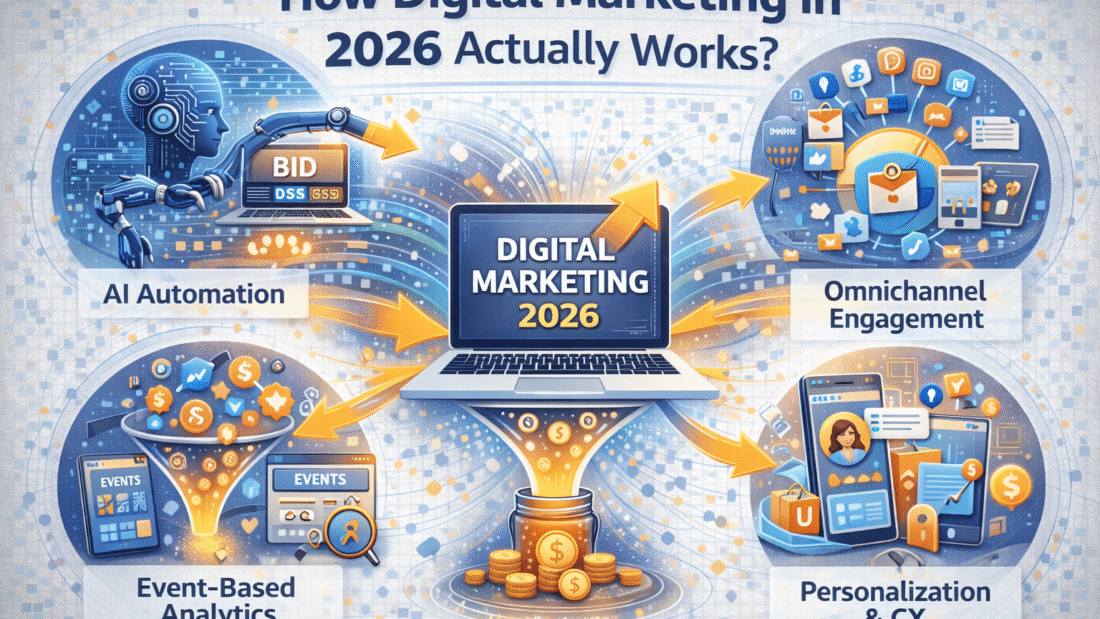
How Digital Marketing in 2026 Actually Works?

  • Instead of random posting or ads, modern digital marketing follows this closed-loop system:

  1. User Intent Discovery (data + AI)
  2. Traffic Acquisition (SEO, Ads, Social)
  3. Behavior Tracking (events, funnels)
  4. Conversion Optimization (UX, CRO)
  5. Retention & Monetization
  6. Reporting & Attribution
  7. Automation & Scaling

Everything is measurable. Everything is optimizable.

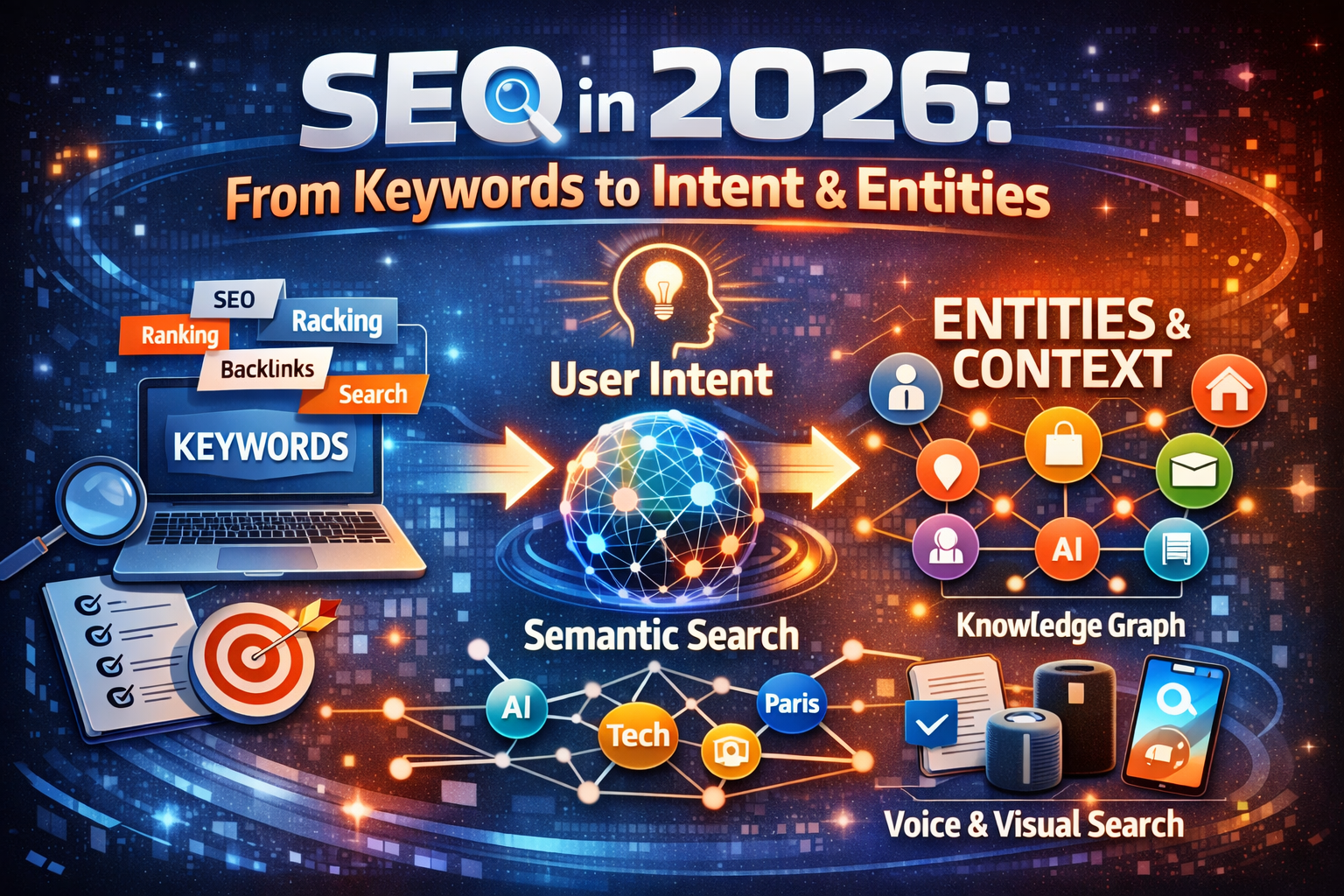
1. SEO in 2026: From Keywords to Intent & Entities

SEO in 2026

SEO in 2026 is not about ranking pages; it’s about owning topics.

What Does SEO Really Mean Now?

SEO = Structuring content and technical assets so search engines clearly understand who you are, what you solve, and why you’re the best result.

Tools Used in SEO 2026

  1. Google Search Console
  2. Ahrefs/Semrush
  3. Screaming Frog
  4. PageSpeed Insights
  5. Surfer SEO / Clearscope

SEO Outputs (What Clients Actually Get)

  1. Keyword-to-URL mapping
  2. Topic clusters (pillar + supporting pages)
  3. Indexed pages & impressions
  4. Click-through rate (CTR)
  5. Organic leads & revenue

Example (Practical)

Instead of writing 10 blogs on “digital marketing”:

  1. 1 pillar page
  2. 15 supporting intent-based pages
  3. Internal linking = topical authority

Google rewards depth + clarity, not volume.

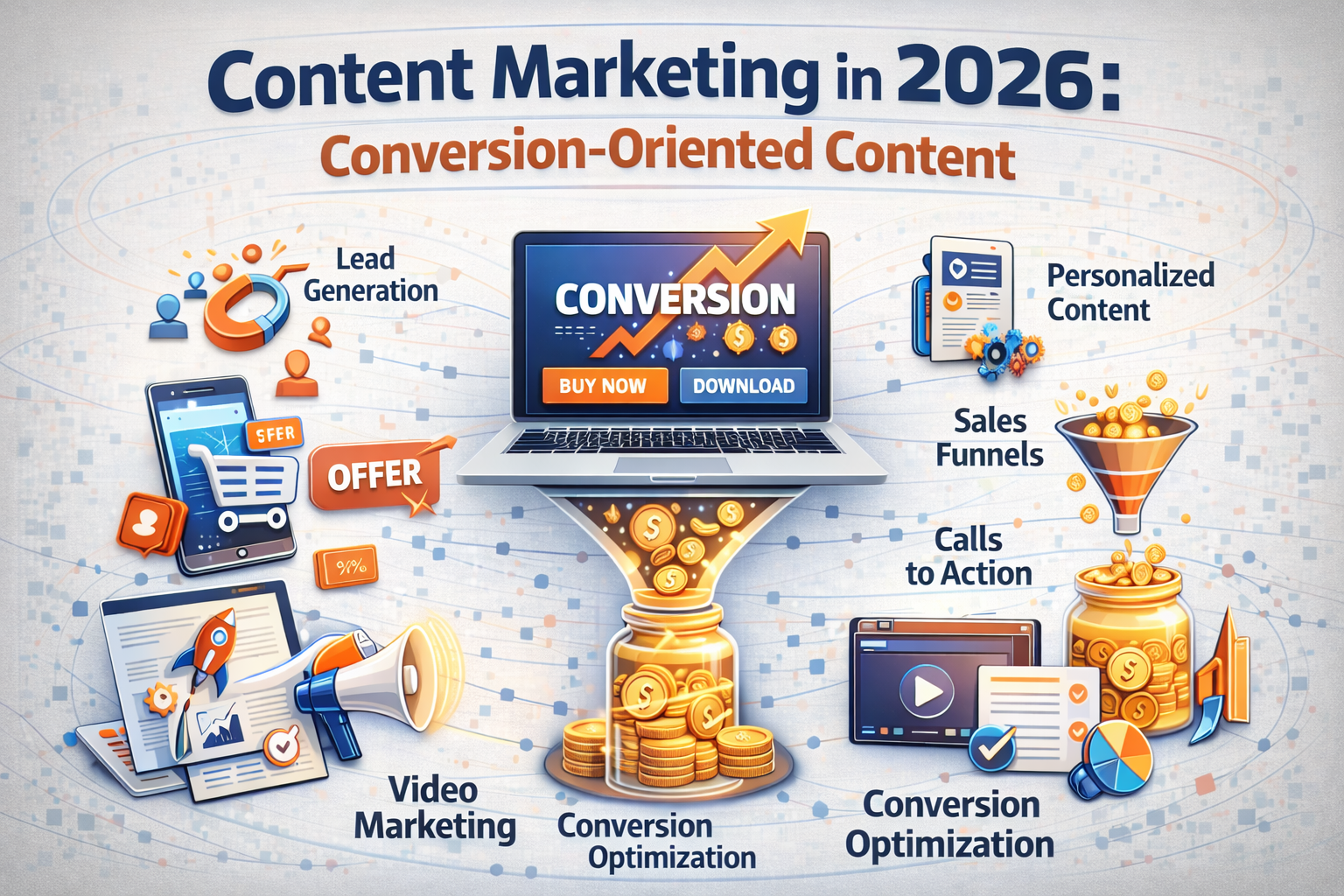
2. Content Marketing in 2026: Conversion-Oriented Content

Content Marketing in 2026

Content is no longer written to “rank.”
It’s written to move users from awareness → trust → action.

Content Types by Funnel Stage

  • 1. Top of Funnel (TOFU)

Informational blogs
Educational videos
Explainers

  • 2. Middle of Funnel (MOFU)

Case studies
Comparison pages
Guides

  • 3. Bottom of Funnel (BOFU)

Service pages
Landing pages
Demo / consultation pages

Tools Used

ChatGPT / Claude (ideation only)
Google Docs + NLP tools
Heatmaps (Hotjar)
GA4 content performance

Outputs

Time on page
Scroll depth
Assisted conversions
Lead attribution

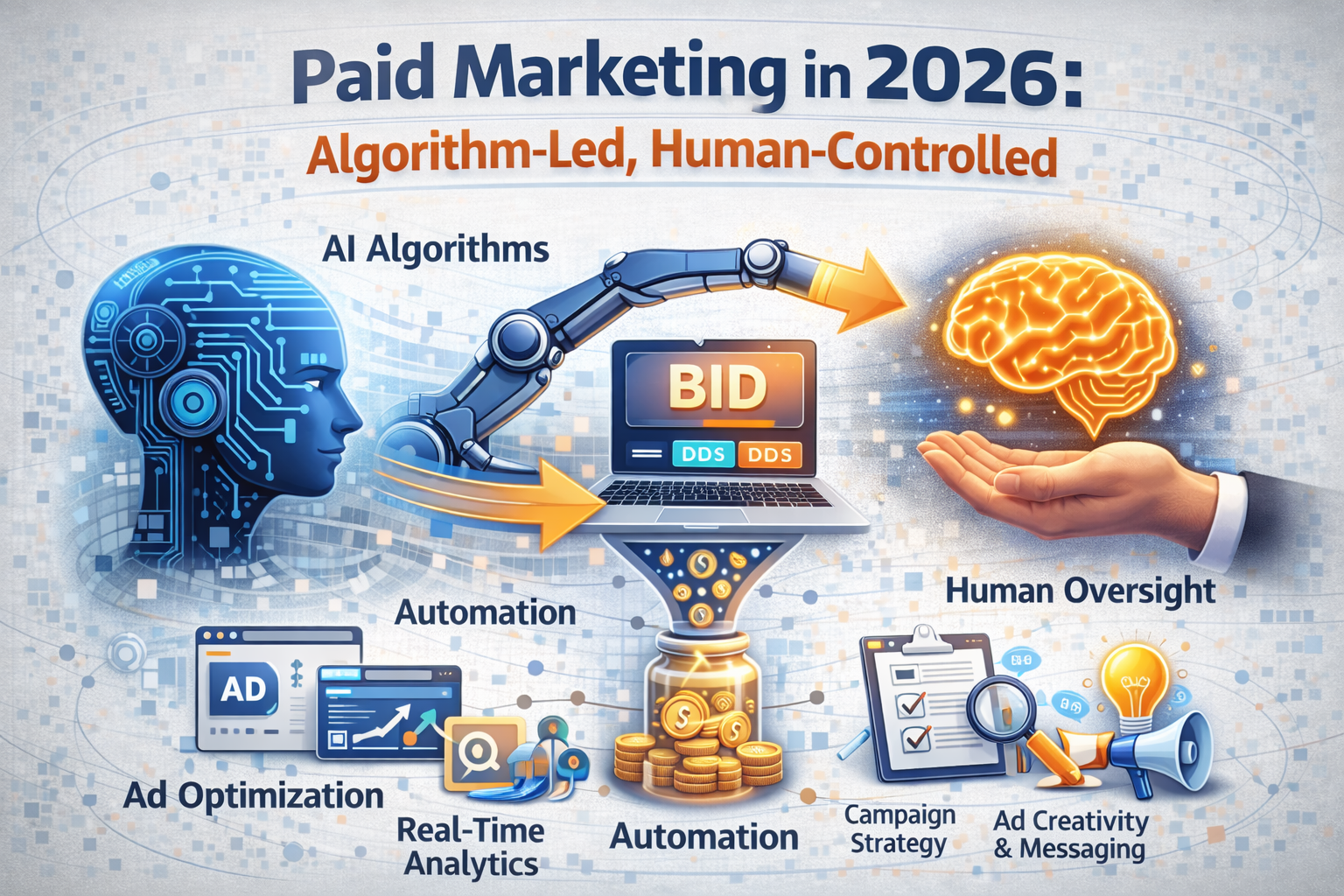
3. Paid Marketing in 2026: Algorithm-Led, Human-Controlled

Paid Marketing in 2026

Paid marketing is not boosting posts anymore.
It’s signal feeding to algorithms.

Platforms Dominating Paid Ads

  1. Google Ads
  2. Meta Ads
  3. LinkedIn Ads
  4. YouTube Ads

What Marketers Control (2026)

  1. Audience signals
  2. Creative angles
  3. Conversion events
  4. Landing page experience

What AI Controls

  1. Bidding
  2. Placements
  3. Scaling
  4. Optimization

Outputs That Matter

CPA (Cost per acquisition)
ROAS
Conversion rate
Funnel drop-offs

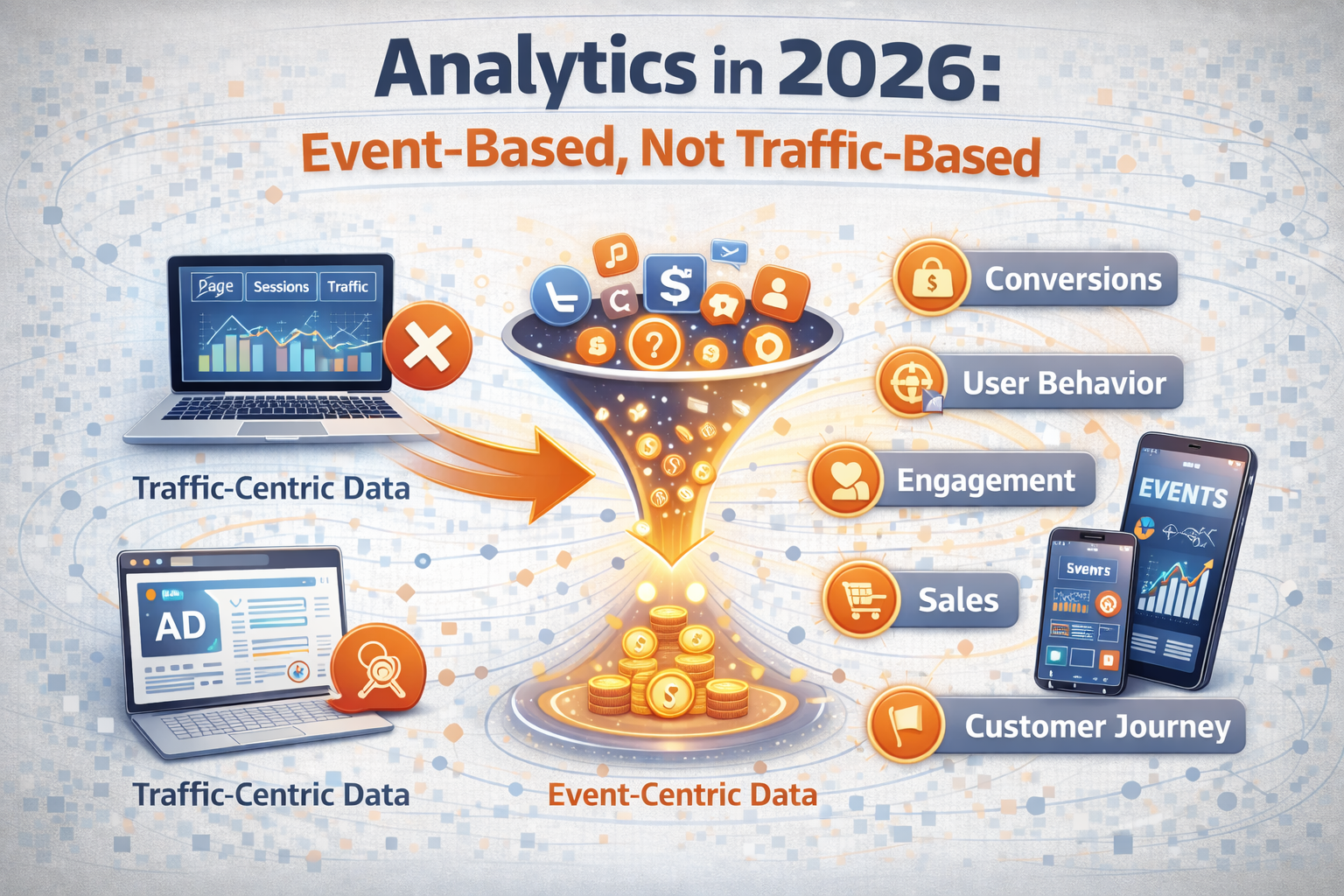
4. Analytics in 2026: Event-Based, Not Traffic-Based

Analytics in 2026

Traffic is vanity.
Behavior is reality.

Core Analytics Tool

  • Google Analytics 4

What GA4 Tracks (Examples)

  1. Scroll
  2. Click
  3. Form submit
  4. Video play
  5. Purchase
  6. Lead

Outputs Used for Decisions

Funnel visualization
Drop-off points
Source-wise conversions
User lifetime value

Marketing decisions in 2026 are data-validated, not opinion-based.

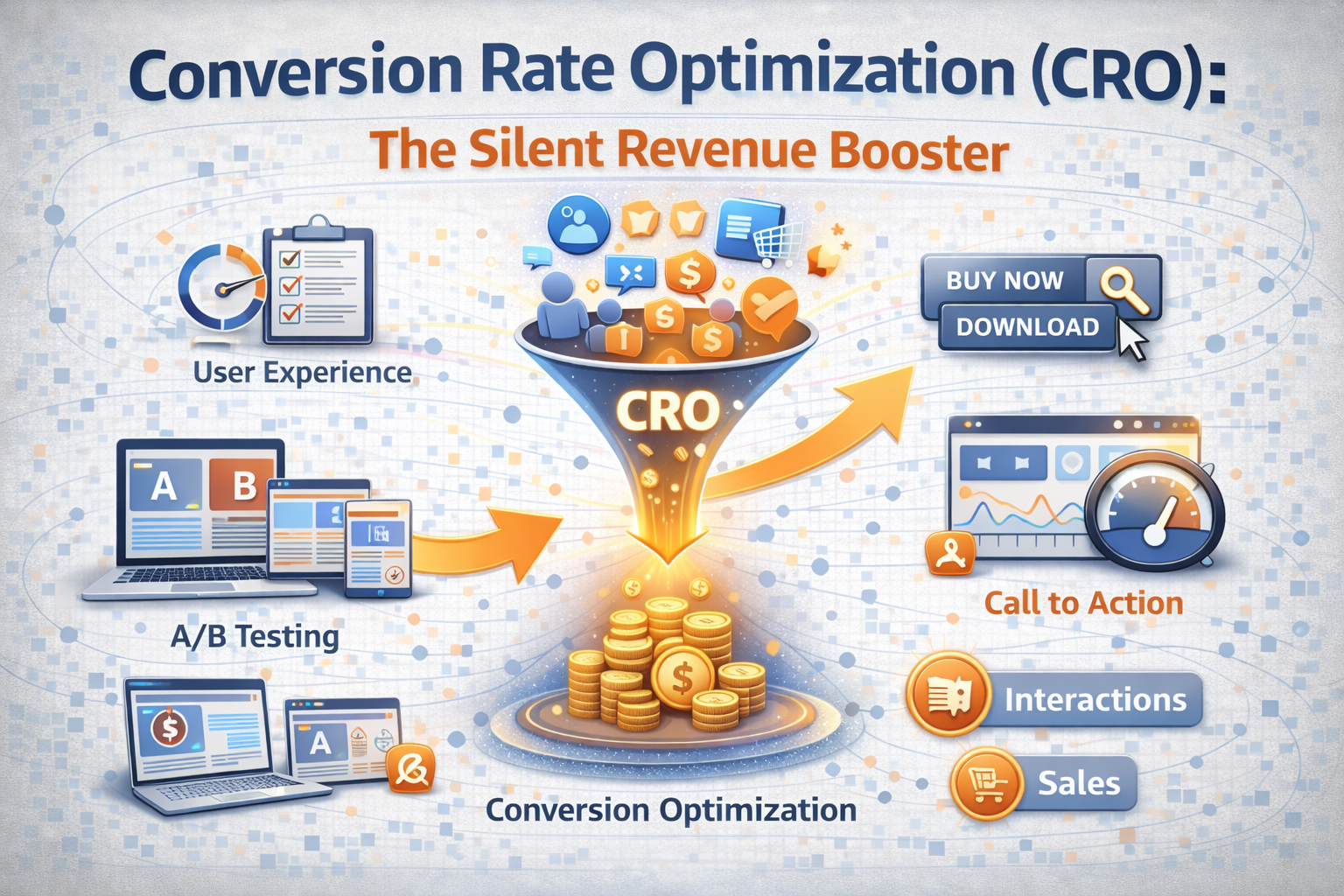
5. Conversion Rate Optimization (CRO): The Silent Revenue Booster

Conversion Rate Optimization (CRO

CRO is what separates average marketers from elite ones.

CRO Focus Areas

  1. Page layout
  2. Copy clarity
  3. CTA placement
  4. Trust signals
  5. Page speed

Tools Used

  1. Hotjar / Microsoft Clarity
  2. A/B testing tools
  3. Session recordings

Outputs

  1. Higher conversion rate
  2. Lower ad cost
  3. More leads with same traffic

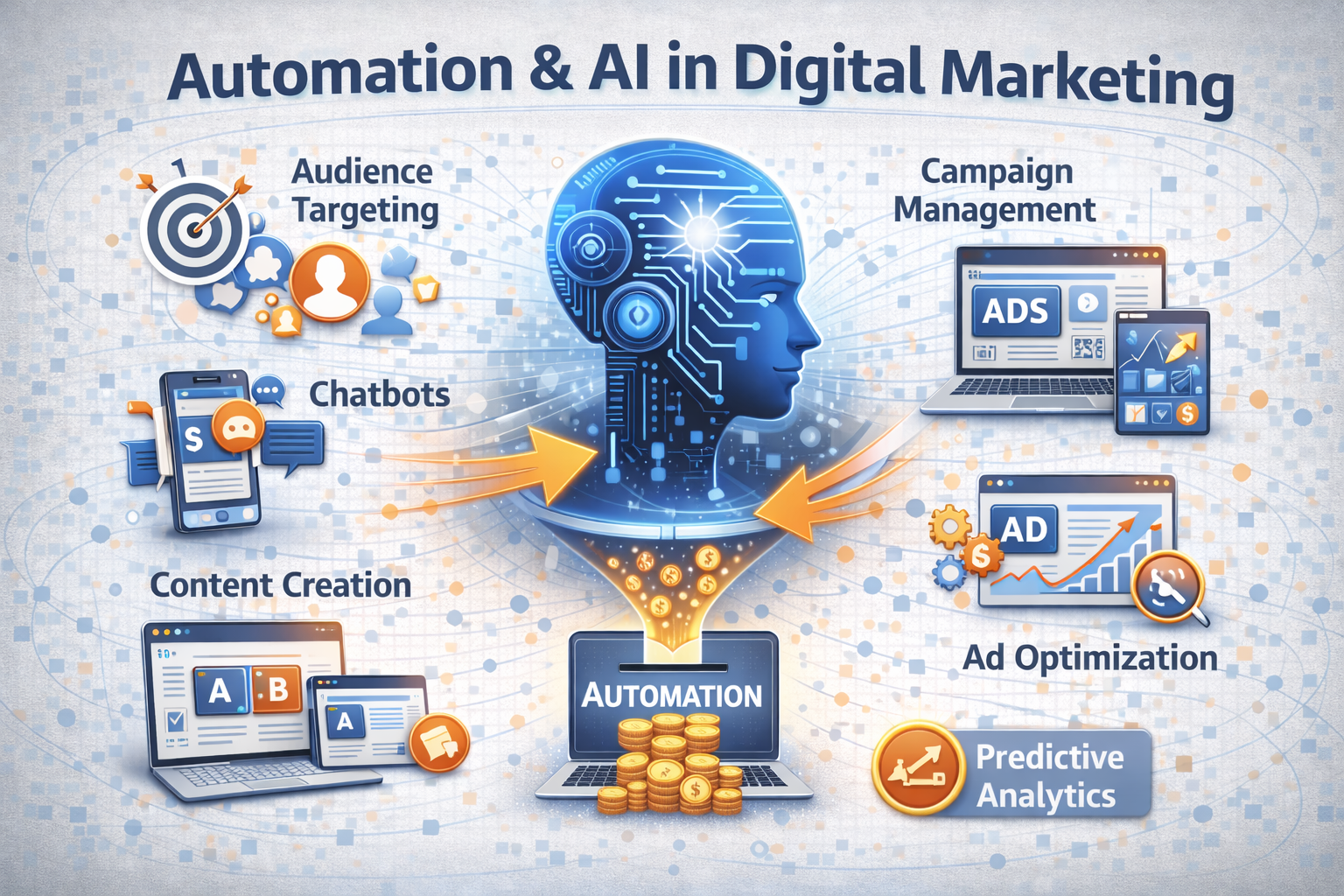
6. Automation & AI in Digital Marketing 2026 Reality

Automation & AI in Digital Marketing 2026 Reality

AI doesn’t replace marketers.
It replaces inefficient marketers.

Where Automation Is Used

  1. Lead nurturing
  2. Email sequences
  3. WhatsApp follow-ups
  4. CRM updates
  5. Chatbots

Outputs

Faster response time
Higher lead qualification
Lower manpower cost

Digital Marketing Deliverables in 2026 (What Clients Expect)

Clients don’t want “services”.
They want results dashboards.

Typical Monthly Outputs

  1. Leads generated
  2. Cost per lead
  3. Conversion rate
  4. Revenue attribution
  5. Growth comparison (MoM)

If you can’t show numbers, you lose trust.

Digital Marketing Careers in 2026 (Skill-Based, Not Degree-Based)

Top 5 High-Value Roles in Digital Marketing:

  1. Performance Marketer
  2. SEO Strategist
  3. CRO Specialist
  4. Marketing Analyst
  5. Automation Consultant

Degrees matter less. Proof of output matters more.

Final Truth About Digital Marketing in 2026

Digital marketing is:

>> Not posting content
>> Not running ads blindly
>> Not “being online”

It is:
✔ Data
✔ Psychology
✔ Systems
✔ Testing
✔ Optimization
✔ Revenue logic

If you understand how users think, how platforms learn, and how funnels convert, you control digital marketing.

Beginner’s-Guide

What is Digital Marketing? A Beginner’s Guide

In today’s world, if your business isn’t online, you’re missing out on a huge audience. That’s where digital marketing comes in—it helps you reach people through websites, search engines, social media, email, and more. Whether you’re a startup or a growing brand, this guide will help you understand what digital marketing is and why it matters.

What is Digital Marketing?

Digital marketing is the use of online platforms and tools to promote products, services, or brands. Unlike traditional marketing (like print ads or billboards), digital marketing allows businesses to reach a global audience in real time and track results instantly.

Key Channels of Digital Marketing

Here are the main types of digital marketing every beginner should know:

1. Search Engine Optimization (SEO)

Optimizing your website to appear higher in search engine results (like Google) when people search for relevant terms.

2. Search Engine Marketing (SEM) / Google Ads

Running paid ads on Google or Bing to drive targeted traffic to your website.

3. Social Media Marketing (SMM)

Promoting your brand on platforms like Facebook, Instagram, LinkedIn, and Twitter to engage with your audience.

4. Content Marketing

Creating helpful content (like blogs, videos, infographics) to educate and attract potential customers.

5. Email Marketing

Sending targeted emails to your audience for promotions, updates, and nurturing leads.

6. Affiliate & Influencer Marketing

Working with others (affiliates or influencers) who promote your brand for a commission or sponsorship.

7. Online Reputation Management (ORM)

Managing and improving how your business is perceived online through reviews, ratings, and responses.

Key Channels of Digital Marketing

Who Can Use Digital Marketing?

Anyone! Whether you’re a small business owner, freelancer, startup founder, or large brand, digital marketing can help you:

Getting Started with Digital Marketing

You don’t need to be a tech expert to start. Here’s how:

  1. Build a professional website
  2. Set up business social media accounts
  3. Use SEO to improve search visibility
  4. Run basic Google or Facebook Ads
  5. Track your performance using tools like Google Analytics

Final Thoughts

Digital marketing is essential for any business looking to grow in the modern world. Start small, stay consistent, and you’ll see results over time. And if you ever feel stuck, Kaizen is here to help with expert digital marketing services designed for your success.

mumbai-SEO

How SEO Can Help Mumbai-Based Businesses Outrank the Competition

Mumbai, India’s financial capital, is home to thousands of thriving businesses across industries—retail, hospitality, healthcare, IT, and professional services. But with such a competitive market, how can your business stand out and attract customers consistently?

The answer lies in Search Engine Optimization (SEO). A well-planned SEO strategy can help Mumbai-based businesses increase online visibility, attract high-intent customers, and stay ahead of competitors.

In this blog, we’ll explore how SEO can help you outrank the competition in Mumbai and why you should start optimizing your online presence today.

1. Boosting Local Visibility with Local SEO

For Mumbai businesses, local SEO is crucial. Consumers often search for services near them, using terms like “best dentist in Andheri” or “digital marketing agency in Bandra.”

How It Helps You Beat Competitors:

  • Google Business Profile Optimization: Ranking in the top 3 of Google’s local pack means higher footfalls and inquiries.
  • Location-Based Keywords: Optimizing for “near me” and area-specific keywords (e.g., Andheri, Borivali, Navi Mumbai) helps you appear in local searches before your competitors.
  • Positive Reviews & Ratings: Encouraging customer reviews boosts credibility and increases your chances of ranking higher in local search results.

2. Ranking for High-Intent Keywords

A targeted SEO strategy focuses on keywords your customers are actively searching for. For instance:

  • A salon in Mumbai should target “best hair spa in Bandra” instead of generic terms like “hair spa.”
  • A real estate firm can rank for “luxury flats for sale in Powai” to attract serious buyers.

By optimizing for long-tail, location-specific keywords, you can attract qualified leads and outrank big brands that target generic terms.

3. Creating Quality Content That Builds Authority

Mumbai customers trust businesses that educate and provide value. Publishing blogs, how-to guides, and industry insights establishes you as an authority.

For example:

  • A Mumbai-based fitness trainer can post “Top 5 Gyms in Andheri for Beginners.”
  • A law firm can write about “How to Register a Business in Mumbai – Step by Step.”

High-quality content not only builds trust but also attracts backlinks from local publications, improving your domain authority and search rankings.

4. Beating Paid Ads with Long-Term Organic Results

While paid ads offer quick visibility, SEO provides long-term organic traffic at a fraction of the cost. Once you rank on the first page, you’ll receive consistent website visitors without paying per click, unlike competitors relying solely on ads.

5. Mobile-First Optimization for Mumbai’s On-the-Go Consumers

Most Mumbaikars browse on smartphones while commuting. A mobile-optimized website ensures:

  • Faster loading speeds
  • Easy navigation for on-the-go users
  • Higher chances of ranking in Google’s mobile search results

If your competitor’s website is slow or not mobile-friendly, you can easily outrank them with a better user experience.

6. Building Trust with Online Reputation Management

Consumers in Mumbai often check reviews before buying or booking services. Incorporating SEO with reputation management strategies—such as responding to reviews, optimizing testimonials, and showcasing ratings—can help you stand out from competitors with weaker reputations.

7. Continuous Tracking and Competitor Analysis

SEO tools allow you to track competitors’ rankings, keywords, and backlink strategies. By analyzing what’s working for them and improving on it, you can consistently stay a step ahead.

Key Takeaway

In Mumbai’s competitive market, SEO is no longer optional—it’s essential for businesses that want to grow online, attract local customers, and beat competitors.

From local SEO and targeted keywords to mobile optimization and authority-building content, a strong SEO strategy can drive high-quality leads and long-term growth.

Ready to Outrank Your Competitors in Mumbai?

At Kaizen Digital Marketing Agency, we specialize in helping Mumbai-based businesses dominate local search rankings. Whether you run a salon in Bandra, a café in Powai, or an IT firm in Andheri, we can help you get more visibility, more leads, and more sales.